Control and Monitoring Systems
Control and monitoring systems are structured frameworks designed to supervise, regulate, and optimize the behavior of dynamic systems. Their primary purpose is to ensure that a system operates within defined performance limits, safety constraints, and operational goals.
Monitoring refers to the continuous observation and measurement of system variables. These variables may include physical parameters such as temperature, pressure, voltage, or speed, as well as digital metrics like CPU usage, network latency, or error rates. Sensors or data collection tools gather this information in real time and transmit it to a processing unit for analysis.
Control is the decision-making and action component of the system. After monitoring data is analyzed, the controller compares the current state with a desired reference value or setpoint. If deviations are detected, corrective actions are calculated and applied through actuators or software adjustments. The goal is to reduce discrepancies and maintain stability.
There are two fundamental control structures:
Open-loop control operates without feedback. The system executes actions based on predefined instructions without verifying the outcome. This structure is simple but less adaptive to disturbances.
MORE...
Closed-loop control, also known as feedback control, continuously measures output and adjusts behavior accordingly. This structure improves accuracy, stability, and resilience against unpredictable changes in the environment.
An essential concept in control systems is the feedback loop. A feedback loop includes:
A sensor to measure output
A controller to process information
An actuator to apply corrective action
The system being regulated
The loop repeats continuously to maintain equilibrium. The effectiveness of this loop depends on response time, precision of measurement, and stability of control algorithms.
In complex systems, monitoring also includes fault detection and anomaly recognition. If abnormal conditions are detected, the control mechanism can trigger alarms, isolate faulty components, or shut down operations to prevent damage. In critical environments such as power grids, aerospace systems, industrial plants, and data centers, reliability and fault tolerance are essential.
Advanced control and monitoring systems may incorporate predictive modeling, adaptive algorithms, and artificial intelligence to anticipate failures before they occur. These systems analyze historical patterns to improve decision-making and optimize performance.
Key characteristics of effective control and monitoring systems include stability, accuracy, responsiveness, reliability, scalability, and security. Poorly designed systems can lead to oscillations, delayed responses, resource inefficiency, or catastrophic failures.
In summary, control and monitoring systems create a continuous cycle of measurement, evaluation, correction, and verification. This cycle ensures that systems operate safely, efficiently, and consistently within their intended parameters across various engineering and technological domains.
Control and Monitoring in Internet of Things (IoT)
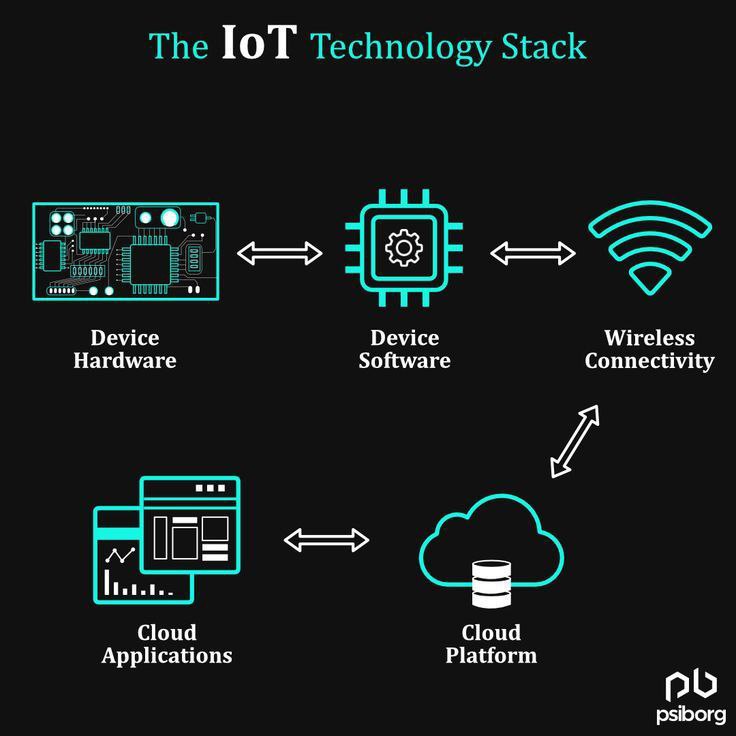
In the context of the Internet of Things (IoT), control and monitoring refer to the process of collecting data from connected devices and using that data to automatically manage or adjust system behavior. IoT systems consist of physical devices embedded with sensors, software, and communication capabilities that allow them to exchange information over networks.
Monitoring in IoT involves gathering real-time data from sensors. These sensors measure environmental or operational variables such as temperature, humidity, motion, light intensity, energy usage, location, or equipment status. The collected data is transmitted through communication protocols (such as Wi-Fi, Bluetooth, cellular networks, or LPWAN technologies) to a central system, often cloud-based, where it is processed and analyzed.
Control in IoT uses the analyzed data to make decisions and execute actions. If monitored values deviate from predefined thresholds or conditions, the system sends commands back to devices or actuators. For example, if a temperature sensor detects overheating in an industrial machine, the control system can automatically reduce power, activate cooling systems, or shut down the equipment to prevent damage.
MORE...
IoT control and monitoring systems typically include the following components:
Sensors for data acquisition
Microcontrollers or embedded systems for local processing
Communication modules for data transmission
Cloud platforms or edge servers for analysis
Actuators for implementing control actions
A key feature of IoT-based control systems is remote accessibility. Operators can monitor system performance and send control commands from anywhere using dashboards or mobile applications. This improves efficiency, reduces manual intervention, and enables predictive maintenance.
Security is critical in IoT control and monitoring. Because devices are connected to networks, they are vulnerable to cyber threats. Encryption, authentication, secure communication protocols, and intrusion detection mechanisms are necessary to ensure data integrity and prevent unauthorized control.
Scalability is another important factor. IoT systems often involve thousands or millions of devices. The control and monitoring architecture must handle large volumes of data while maintaining low latency and reliable performance.
In summary, control and monitoring in IoT involve continuous data collection from connected devices and automated decision-making to regulate system behavior. This integration of sensing, communication, analysis, and actuation enables smart homes, industrial automation, smart cities, healthcare monitoring, and energy management systems to operate efficiently and intelligently.